Introduction
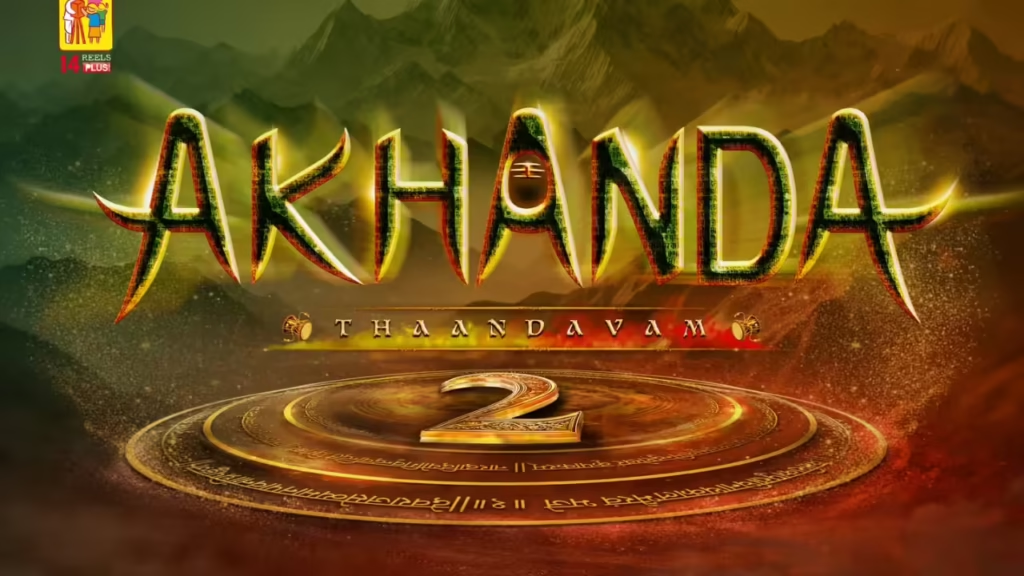
In an era where commercial cinema often balances between spectacle and substance, Akhanda 2: Thaandavam arrives with unapologetic confidence. This sequel is not just another follow-up; it is a continuation of a belief system that celebrates faith, power, righteousness, and mass heroism. Directed by Boyapati Srinu, a filmmaker known for loud emotions and grand visuals, Akhanda 2 promises to expand the spiritual and action-driven universe that captivated audiences in the first part.
This article takes a critical yet simple look at Akhanda 2: Thaandavam, exploring its theme, cast, crew, cinematic language, and why this film holds a special place in contemporary Telugu cinema.
The Legacy of Akhanda
The first Akhanda was more than a box-office success. It became a cultural moment. The film blended devotion, action, and moral conflict, presenting the protagonist as a protector guided by divine force. Audiences connected deeply with its spiritual undertone, especially the Aghora elements and the portrayal of unwavering belief.
Akhanda 2: Thaandavam does not attempt to dilute that impact. Instead, it aims to amplify the scale, deepen the mythological layer, and deliver action with greater emotional weight.
Meaning of ‘Thaandavam’
The word Thaandavam is deeply rooted in Indian mythology. It refers to the cosmic dance of Lord Shiva, symbolizing creation, destruction, and balance. By using this subtitle, the makers clearly signal that the sequel will lean heavily into divine justice and spiritual fury.
This is not violence for spectacle alone. It is portrayed as necessary destruction, carried out to restore order. That philosophical idea forms the emotional backbone of the film.
Story Expectations (Without Spoilers)
While the makers have kept the plot tightly under wraps, the teaser visuals suggest:
- A larger conflict involving belief, land, and power
- A hero who is less human, more force
- Antagonists who challenge not just a man, but an ideology
Unlike many sequels that repeat familiar beats, Akhanda 2 appears to raise moral questions. What happens when faith is mocked? What is the price of silence? And how far can righteousness go before it turns into destruction?
These questions give the film a strong emotional and philosophical foundation.
Cast – Powerhouse Performances Expected
Nandamuri Balakrishna
At the center of Akhanda 2 stands Nandamuri Balakrishna, an actor whose screen presence thrives in larger-than-life roles. Balakrishna is not merely playing a character here; he is embodying an idea of strength and belief.
His performance is expected to be:
- Fierce
- Emotionally controlled
- Spiritually intense
Balakrishna’s ability to command silence and chaos alike is one of the film’s strongest assets.
Female Lead
While details are still emerging, the female character in Akhanda 2 is expected to be more than ornamental. The makers have hinted at emotional depth and narrative importance, rather than just romantic presence.
Supporting Cast
Boyapati Srinu films often feature strong supporting characters, including:
- Devotees
- Antagonists with ideological weight
- Authority figures representing corruption or moral decay
Each supporting role contributes to building a complete world, rather than existing only for convenience.
Crew – The Pillars Behind the Vision
Director: Boyapati Srinu
Boyapati Srinu is known for his unfiltered mass storytelling. Critics often debate his loud style, but one cannot deny his clarity of vision. In Akhanda 2, Boyapati appears more refined and focused, blending spectacle with symbolism.
His strength lies in:
- Elevation scenes
- Emotional confrontations
- Mythological imagery
Producer: Raam Achanta & Gopi Achanta
The Achanta brothers have backed the film with grand production values. From the teaser itself, the scale is evident. Sets, costumes, and visual effects reflect a no-compromise attitude.
Music Director: Thaman S
Music plays a spiritual role in Akhanda 2. Thaman S is expected to deliver:
- Powerful background scores
- Chant-based themes
- Emotion-driven sound design
Rather than catchy tunes, the focus is on atmosphere and intensity.
Cinematography
The visuals are designed to feel larger than reality. Fire, ash, temples, and cosmic patterns dominate the color palette, reinforcing the film’s spiritual tone.
Themes and Symbolism
Akhanda 2: Thaandavam is rich in symbolism:
- Trishul – Balance of creation and destruction
- Fire – Purification
- Ash – Mortality and truth
- Silence – Inner strength
These symbols elevate the film beyond routine action cinema, giving it a mythic texture.
Language and Accessibility
One of the strongest aspects of the Akhanda franchise is its simple language. Dialogues are:
- Easy to understand
- Emotionally direct
- Spiritually resonant
This simplicity allows the film to connect with rural and urban audiences alike.
Critical Perspective
From a critic’s point of view, Akhanda 2 carries both strengths and risks.
Strengths
- Clear ideological spine
- Strong central performance
- High emotional conviction
Risks
- Overuse of loud moments
- Thin character arcs if not balanced
However, early signs suggest that the makers are aware of these pitfalls and aim to deliver controlled intensity rather than chaos.
Why Akhanda 2 Matters
In a time where realism dominates cinema, Akhanda 2 boldly embraces belief-driven storytelling. It reminds audiences that cinema can also be:
- Ritualistic
- Symbolic
- Emotionally cleansing
It may not appeal to everyone, but for those who connect with its spiritual energy, it promises a theatrical experience meant to be felt, not analyzed.
Conclusion
Akhanda 2: Thaandavam stands as a bold statement in Telugu cinema. It does not whisper; it chants. It does not explain; it asserts. With a strong cast, experienced crew, and a clear spiritual vision, the film positions itself as more than entertainment—it aims to be an experience of belief and power.
Whether it becomes a critical triumph or a mass phenomenon, one thing is certain: Akhanda 2 will not be ignored.
For a critic, that alone makes it worth watching.